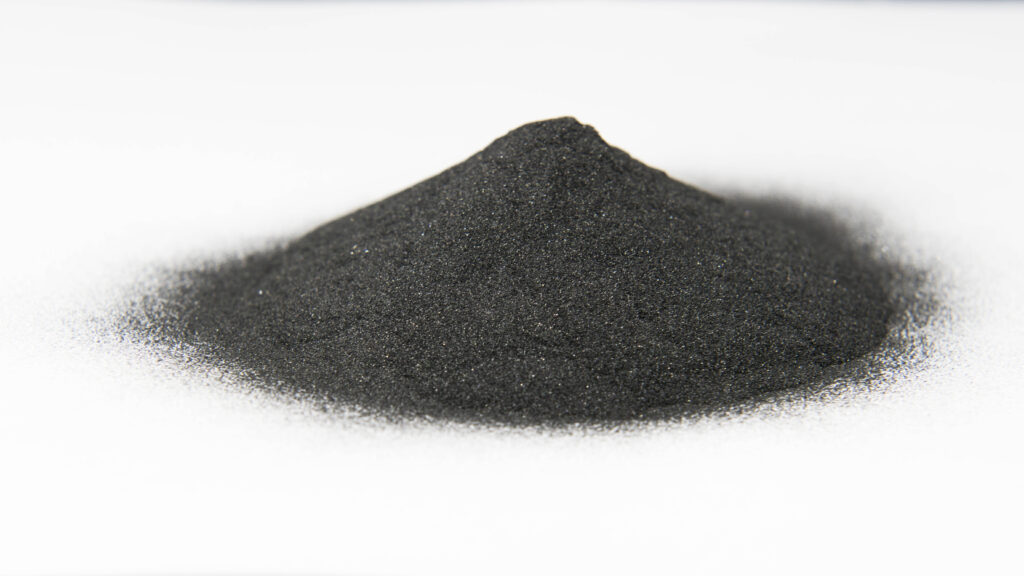


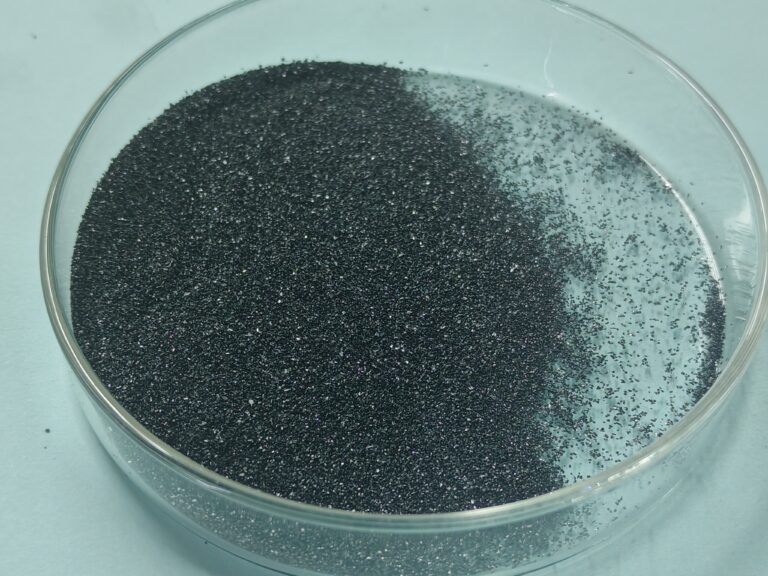
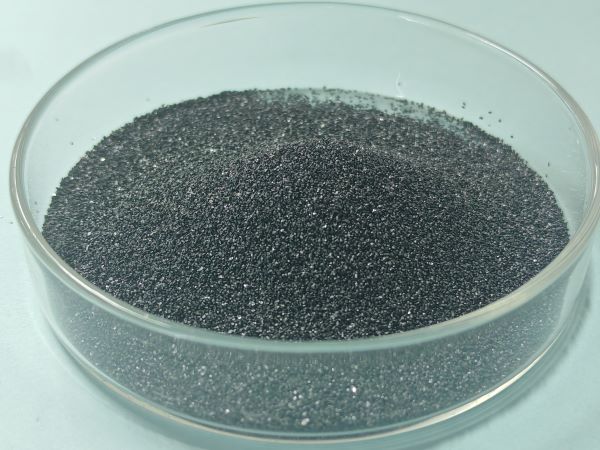
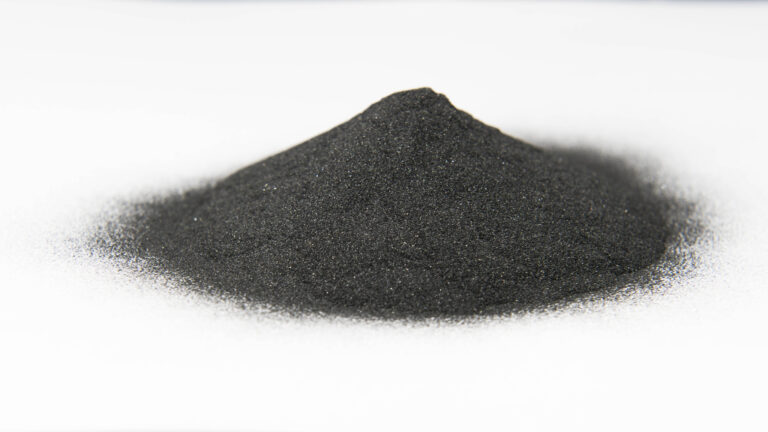
Карбид бора , химически обозначаемый как B₄C и получивший прозвище «черный алмаз», представляет собой сверхтвердый ковалентный керамический материал, образованный атомами бора и углерода, обладающий уникальной ромбоэдрической кристаллической структурой. Открытый в XIX веке и производимый в больших количествах методом карботермического восстановления в электродуговых печах, он представляет собой черный кристаллический порошок с едва заметным металлическим блеском, являясь третьим по твердости искусственным материалом после алмаза и кубического нитрида бора, с твердостью по шкале Мооса 9,3–9,5 и твердостью по шкале Виккерса более 30 ГПа. Это редкое сочетание исключительной твердости, низкой плотности и выдающейся химической стабильности делает его незаменимым в высокотехнологичных промышленных секторах.
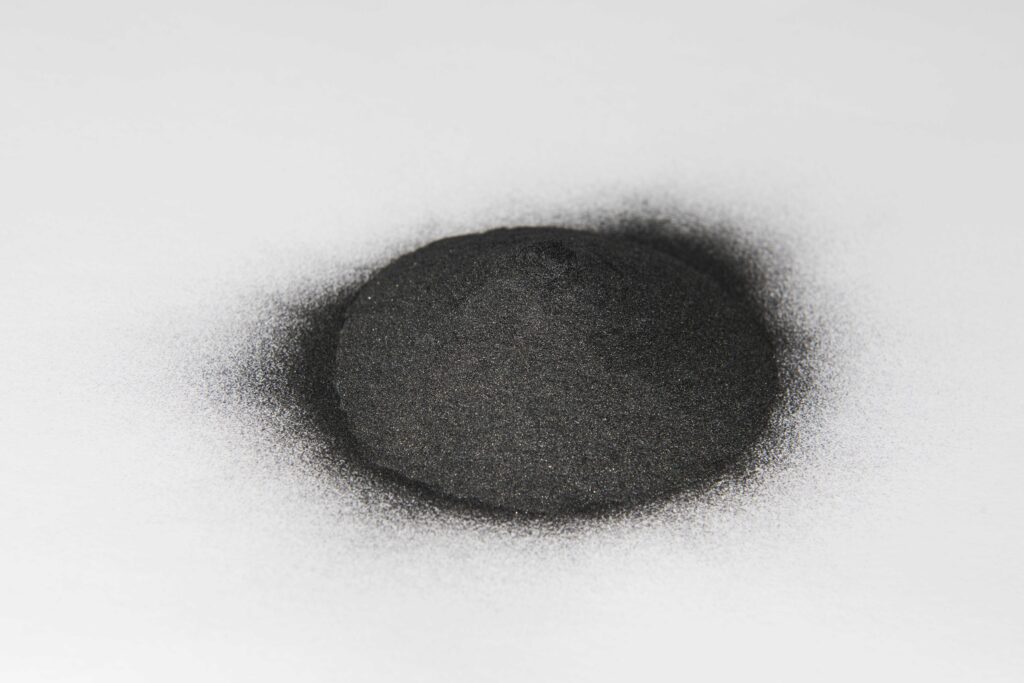
Its physical and chemical advantages lay a solid foundation for diversified applications. It owns a low density of only 2.52 g/cm³, far lighter than most metal and ceramic abrasives, paired with a high melting point of 2350°C and ultra-low thermal expansion coefficient, delivering stable performance under drastic temperature changes. Chemically inert against most acids, alkalis and corrosive solvents at room temperature, it resists oxidation below 1000°C without reacting with common industrial mediums. Another distinctive trait is its powerful thermal neutron absorption capacity, which enables safe nuclear radiation shielding without generating long-lived radioactive waste. Unlike silicon carbide or white fused alumina, boron carbide maintains sharp cutting edges continuously during grinding, featuring superior self-sharpening performance and higher processing efficiency.
As a premium superabrasive, boron carbide powder dominates precision lapping and polishing scenarios for hard-to-machine workpieces. It is widely adopted for fine finishing of tungsten carbide tools, zirconia fiber ferrules, optical sapphire lenses, advanced ceramics and synthetic gemstones3M. Uniform particle grades from coarse grit to ultra-fine micropowder meet different processing demands: coarse grains remove thick machining traces rapidly, while micron-level powder delivers mirror surfaces without scratches, ideal for optical communication and semiconductor component superfinishing. Besides lapping powder, sintered boron carbide blanks are manufactured into long-service waterjet cutting nozzles and sandblasting nozzles, whose wear resistance outperforms tungsten carbide by multiple times and cuts maintenance costs for metal processing factories.
Beyond abrasive fields, boron carbide expands into military, nuclear and high-temperature refractory industries. Its high hardness-to-weight ratio makes it a core raw material for lightweight ballistic armor and bulletproof panels, effectively blocking impact energy while reducing equipment weight. In nuclear power plants, granular boron carbide serves as reactor control rods and shielding blocks to absorb excess neutrons and guarantee operational safety. Added into refractory castables and high-temperature coating formulas, it improves anti-erosion and wear resistance of furnace linings for metallurgy and glass production lines. It also acts as functional filler for wear-resistant composite coatings and thermal insulation materials, lifting the hardness and thermal stability of finished products.
Производители предлагают продукцию из карбида бора различной чистоты и размера частиц, соответствующую мировым промышленным стандартам. Высокочистые марки проходят испытания на соответствие требованиям RoHS с необнаружимыми остатками тяжелых металлов, что делает их пригодными для экспортно-ориентированного производства электроники и оптики. Карбид бора, используемый для прецизионной шлифовки, износостойких запасных частей, ядерной защиты или высокотемпературных огнеупоров, представляет собой высокоэффективное и экономичное решение для экстремальных условий эксплуатации и остается важным передовым керамическим материалом в современном прецизионном производстве и новых энергетических отраслях.